
 740-369-1953
Losing a tooth changes more than your smile. It changes how you chew, how your jawbone holds up over time, and often how confident you feel speaking or laughing in front of other people. For patients in Powell, Ohio who are weighing their options, dental implants have become the most predictable long-term solution we offer at Hidden Ravines Dental - but the decision still deserves real information, not just a sales pitch.
This article walks through how dental implants actually work, what the surgery and healing process involve, what influences the cost, and how implants compare with bridges or dentures. Our goal is to give you a realistic, clinically grounded picture so you can walk into a consultation already informed and ready to ask the right questions.
Whether you're missing a single tooth from an injury, dealing with a failing crown, or considering a full-arch solution after years of wearing dentures, understanding the fundamentals of implant dentistry will help you make a confident, well-informed choice for your oral health.
In This Article
How Dental Implants Actually Work
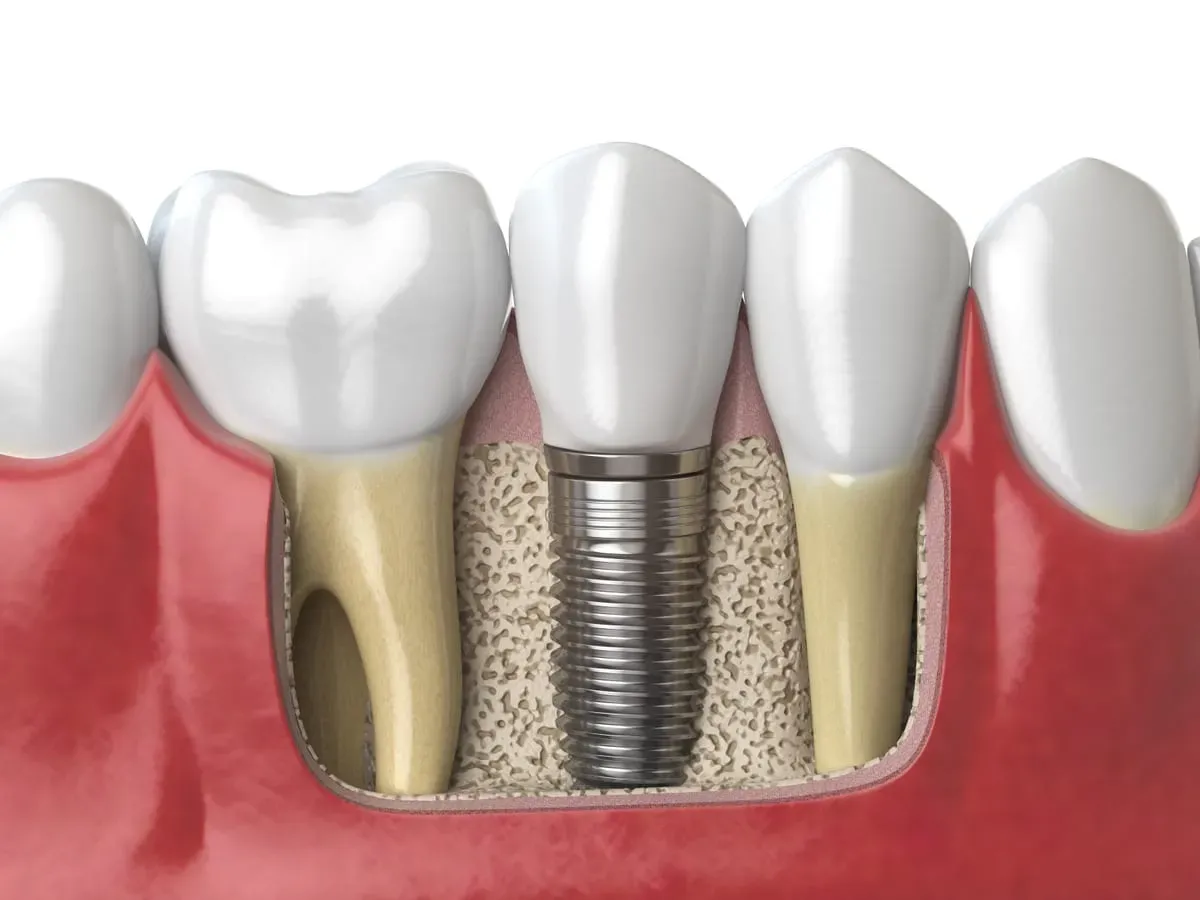
A dental implant is a small titanium or zirconia post that your dentist places directly into the jawbone, acting as a replacement for the root of a missing tooth. Titanium has a unique property called osseointegration, meaning living bone cells actually fuse to the surface of the implant over the course of several weeks. This is what makes implants so stable compared with other tooth-replacement options - they don't rely on neighboring teeth for support, and they don't shift or rock the way a loose denture can.
Once the implant has integrated with the bone, a connector piece called an abutment is attached to it, and a custom-made crown is secured on top. The result looks, feels, and functions like a natural tooth. For patients missing several teeth, implants can also support a bridge or a full denture, reducing the number of posts needed while still providing the stability of a fixed, bone-anchored structure.
What makes implants especially valuable for long-term oral health is that they preserve bone. When a tooth is missing and nothing replaces the root, the surrounding jawbone begins to shrink from lack of stimulation. An implant mimics the root's function, keeping that bone active and healthy for years to come.
The Dental Implant Treatment Process, Step by Step
Getting a dental implant isn't a single appointment - it's a carefully sequenced process designed to give the implant the best possible chance of long-term success. Most patients are surprised by how manageable each stage is when it's broken down clearly.
- Consultation and imaging: We take digital X-rays or a 3D scan to evaluate bone density, nerve position, and sinus structure before recommending a treatment plan.
- Extraction and bone grafting, if needed: A damaged tooth may need to come out first, and if the bone has thinned, a graft can rebuild a solid foundation for the implant.
- Implant placement surgery: The titanium post is placed into the jawbone under local anesthesia, a procedure that typically takes less than an hour per implant.
- Healing and osseointegration: Over three to six months, the bone fuses securely around the implant before it can bear the weight of a crown.
- Abutment and final crown placement: Once healing is confirmed, we attach the abutment and deliver a custom crown shade-matched to your natural teeth.
What Recovery Really Looks Like
Most patients describe implant surgery recovery as easier than they expected, especially compared to a tooth extraction. Mild swelling, tenderness at the surgical site, and some bruising are normal for the first two to three days. Over-the-counter pain relievers are usually enough to manage discomfort, though we may prescribe something stronger for the first 24 hours if multiple implants were placed in one visit.
Most people return to work and normal routines within two to three days, sticking to soft foods like yogurt, mashed potatoes, and soup during that initial stretch. The real healing - osseointegration - continues quietly beneath the surface for several months, which is why we don't rush to place the final crown. Patience during this phase is what gives the implant its long-term strength.
During the healing period, good oral hygiene matters more than ever. Gentle brushing around the surgical site, avoiding smoking, and keeping follow-up visits with our Powell office all directly affect how predictably the implant integrates. Patients who follow post-op instructions closely see very low complication rates.
What Affects the Cost of Dental Implants in Powell
One of the most common questions we hear is simply, "What will this cost?" The honest answer is that it depends on several factors specific to your mouth and treatment goals, which is exactly why we recommend a consultation and imaging before quoting a number. A single implant with a crown is a very different investment than a full-arch restoration supported by four or more implants.
- Number of implants needed: Replacing one tooth costs less than replacing several, though implant-supported bridges can reduce the total number of posts required.
- Bone grafting requirements: If bone has receded from long-term tooth loss, a grafting procedure adds to both cost and timeline.
- Material and crown type: Zirconia and porcelain crowns vary in price, and your bite and esthetic goals help determine the best fit.
- Insurance coverage: Some dental plans cover a portion of implant treatment, especially the crown or restorative phase, which we're glad to help you review.
While implants often have a higher upfront cost than a removable partial denture, their durability - often 20-plus years with good care - tends to make them more cost-effective over a lifetime, since they don't typically need the repeated relines or replacements that dentures require.
Dental Implants vs. Bridges and Dentures
Dental bridges and removable dentures remain reasonable options in certain situations, but they work differently than implants and come with different trade-offs. A traditional bridge requires grinding down the healthy teeth on either side of the gap to anchor a false tooth in between, which means otherwise healthy enamel is permanently altered. Dentures rest on the gums rather than fusing with bone, so they can shift while eating or speaking and generally need adjustments or replacement every five to eight years.
Implants, by comparison, don't touch neighboring teeth and don't rely on gum suction or adhesive. Because they integrate with bone, they also help prevent the facial collapse and bone loss that can occur with long-term denture use. For many patients at our Powell practice, this combination of stability, preservation of healthy teeth, and long-term durability is what makes implants the preferred choice when it's clinically appropriate.
That said, the right choice always depends on your specific oral health, bone volume, budget, and personal preferences. We go over all three options honestly during a consultation, rather than assuming implants are automatically the right fit for every patient.
Are You a Good Candidate for Dental Implants?
Most adults in good general health with adequate jawbone density are candidates for dental implants. Gum disease needs to be treated and stabilized first, since healthy gum tissue is essential for the implant to integrate properly. Patients with conditions like uncontrolled diabetes or those who smoke heavily may face a higher risk of complications, though this doesn't automatically rule out treatment - it simply means a more tailored plan and closer monitoring.
Age alone isn't usually a limiting factor. We've successfully placed implants for patients well into their seventies and eighties, provided their overall health supports the healing process. The real determining factors are bone quality, gum health, and how well any underlying medical conditions are managed, all of which we evaluate carefully during your consultation and imaging appointment.
Key Clinical Takeaways
- Dental implants replace the tooth root itself, fusing with the jawbone to provide stability that bridges and dentures can't match.
- The full process, from placement to final crown, typically spans three to six months to allow proper bone integration.
- Cost depends on the number of implants, bone grafting needs, and crown material - a personalized plan requires a consultation and imaging.
- Implants help preserve jawbone density, something dentures and missing teeth cannot do on their own.
- Good candidates generally need healthy gums and adequate bone, but most adults qualify with proper planning.
Frequently Asked Questions
Is dental implant surgery painful?
Most patients report less discomfort than they anticipated, since the procedure is done under local anesthesia and any soreness afterward is typically managed well with standard pain relievers for a few days.
How long do dental implants last?
With good oral hygiene and regular dental visits, the implant post itself can last 20 years or longer, often for life. The crown on top may eventually need replacement after 10 to 15 years due to normal wear.
Can I get an implant if I've been missing a tooth for years?
Yes, though extended tooth loss often leads to bone loss in that area, which may require a bone graft before implant placement. We'll confirm this with imaging during your consultation.
Will my dental insurance cover implants?
Coverage varies widely by plan. Many policies cover a portion of the restorative crown even if the surgical placement isn't covered. Our team can help verify your specific benefits before treatment begins.
How many visits does the entire process take?
Typically three to five visits total: the consultation, the surgical placement, a healing check-in, and the abutment and crown appointment. Straightforward cases may need fewer visits.
Making a Confident Decision About Your Smile
Choosing how to replace a missing tooth is a decision that affects your comfort, your confidence, and your long-term oral health, which is why it deserves more than a quick answer. Dental implants offer a stable, natural-feeling solution that protects your jawbone and functions like your own teeth, but the right path forward always depends on your individual mouth and goals.
If you're in Powell, Ohio and weighing your options for a missing or failing tooth, the best next step is a thorough consultation with imaging so we can give you an honest, personalized recommendation. Our team at Hidden Ravines Dental is here to walk you through every stage, from your first scan to your final restoration, with clear communication along the way.