Clear Aligner Therapy
Discover a clearer path to straighter teeth with custom Invisalign aligners designed around your smile, lifestyle, and schedule.
Crowded teeth, gaps, and bite misalignment do more than affect how your smile photographs. They change how efficiently you chew, how clearly you speak, and how evenly your bite distributes pressure across your jaw joint. Left untreated, these small discrepancies tend to compound over time, making teeth harder to clean and more prone to wear, chipping, or gum irritation along crowded edges.
At Hidden Ravines Dental, we approach Invisalign as a precision-driven clinical process, not a one-size-fits-all product. Every case begins with digital scanning and a thorough bite analysis so we understand exactly how your teeth need to move, in what sequence, and at what pace. That data becomes the foundation for a custom aligner series built specifically for your mouth.
For patients in Powell who want straighter teeth without brackets, wires, or dietary restrictions, Invisalign offers a discreet and removable alternative that still delivers predictable, measurable results when it is planned and monitored correctly by an experienced dental team.
Alignment concerns show up differently from patient to patient. Some are purely cosmetic, while others create real functional strain on teeth and jaw joints. Here are common signs we see during consultations that suggest clear aligner therapy could help.
If any of these sound familiar, a professional evaluation is the best next step. Minor misalignment tends to become more complicated to correct the longer it is left unaddressed, so an early assessment gives you more treatment options.
Misalignment is rarely caused by a single factor. Most patients have two or three contributing issues working together, which is why we spend time during your consultation identifying the full picture before recommending a treatment plan.
Jaw size and tooth size are largely genetic. When the two do not match proportionally, crowding or spacing naturally results, regardless of how well teeth were cared for growing up.
When primary teeth are lost too early, neighboring teeth can drift into the open space, leaving insufficient room for permanent teeth to erupt correctly.
Prolonged thumb sucking, pacifier use, or tongue thrusting during childhood can apply steady pressure on developing teeth and gradually push them out of their ideal position.
Breathing through the mouth instead of the nose changes resting tongue posture, which can influence how the dental arches develop over months and years.
Repeated grinding wears down enamel unevenly and places lateral force on teeth, causing gradual shifting that becomes more noticeable with age.
Teeth continue to shift subtly throughout life, even after prior orthodontic treatment, especially when a retainer has not been worn consistently.
Invisalign works best when each stage is carefully planned and monitored. Here is what to expect as you move through treatment with our team.
We review your dental history, discuss your goals, and examine your bite to determine whether Invisalign is the right fit for your specific alignment concerns.
A digital intraoral scan captures precise impressions of your teeth, which we use to build a visual projection of each movement stage before any aligners are made.
Your series of clear aligners is fabricated specifically to your treatment plan, and we confirm fit and comfort before sending you home with your first trays.
You switch to a new set of aligners roughly every one to two weeks, and we schedule periodic visits to confirm teeth are tracking as planned.
Once your final alignment is reached, we fit you with a retainer to protect your results and keep teeth stable for years to come.
Properly aligned teeth do more than look better. They function better, clean more easily, and reduce the uneven wear that comes with a misaligned bite.
Clear aligners are nearly invisible in everyday conversation and photos, which makes treatment comfortable for adults in professional or social settings.
Aligners come out for meals and brushing, so there are no food restrictions and no extra equipment needed to keep your teeth clean during treatment.
Smooth plastic trays avoid the mouth irritation often associated with metal brackets and wires, especially during the first weeks of treatment.
Straighter teeth are simply easier to floss and clean thoroughly, which lowers your long-term risk of cavities and gum inflammation.
Correcting alignment helps distribute chewing force evenly, reducing strain on specific teeth and easing tension around the jaw joint.
Patients consistently tell us that smiling more freely in photos and conversation is one of the most meaningful results of finishing treatment.
Each Invisalign tray applies a controlled, gentle amount of pressure to specific teeth, nudging them a fraction of a millimeter at a time. Because the force is distributed gradually across a full series of aligners rather than delivered all at once, the surrounding bone and ligament have time to remodel and support the tooth in its new position.
Treatment planning software lets us map the entire movement sequence before your first tray is ever made, which means we can anticipate how one tooth's movement affects the space and position of its neighbors. This level of forecasting reduces surprises mid-treatment and helps us catch any tracking issues early at your progress visits.
Consistency matters more than almost anything else in this process. Wearing your aligners for the recommended hours each day keeps movement on schedule, while skipped wear time allows teeth to settle back toward their prior position, which can extend overall treatment time.
A few consistent daily habits make a real difference in how smoothly your treatment progresses and how your aligners feel day to day.
Consistent wear time keeps movement on track and prevents delays caused by teeth shifting back between changes.
Rinse and gently brush aligners daily to prevent buildup, odor, and visible cloudiness over the course of treatment.
Brushing and flossing after meals before putting aligners back in keeps food debris from being trapped against your teeth.
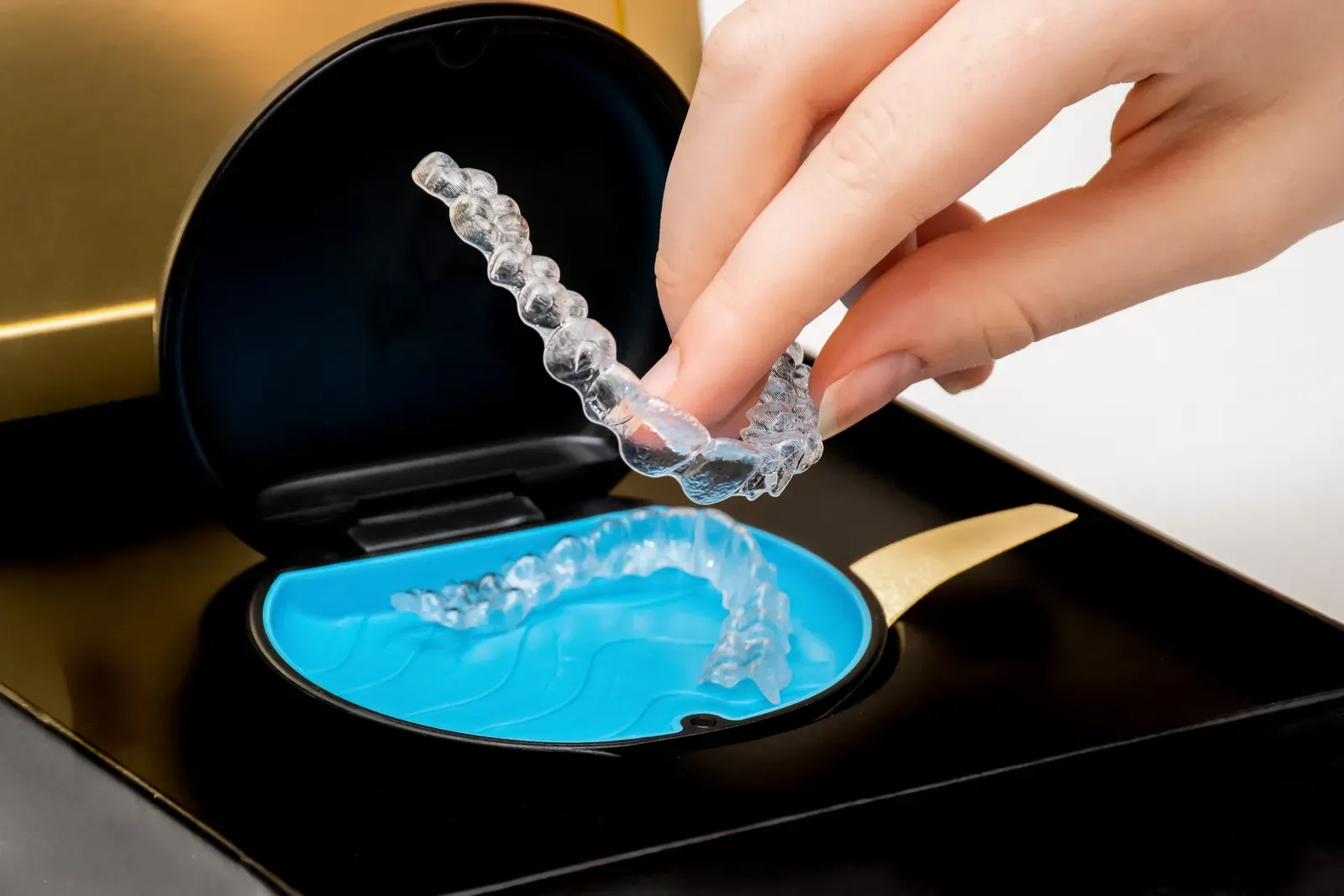
Always keep aligners in their case when not worn to avoid loss, damage, or accidentally throwing them away with a napkin.
A few minutes with a chewie after a new tray goes in helps it seat fully against your teeth for a more accurate fit.
Hot liquids can warp clear plastic aligners, so it is best to remove them before coffee, tea, or other hot beverages.
These habits support your treatment, but they are not a substitute for professional monitoring. Regular check-ins with our team ensure your teeth are tracking correctly and let us make adjustments if needed.
"We walk every patient through exactly what to expect before their first aligner goes in. Invisalign works best when patients understand the plan, and we make sure that is never a mystery."
BOOK YOUR VISIT
Join the OH 43065 families who trust Hidden Ravines Dental. New patients and emergencies are always welcome.

 740-369-1953