Restorative Dentistry
Permanent tooth replacement built to look, feel, and function like your natural teeth, backed by careful planning and gentle, experienced hands.
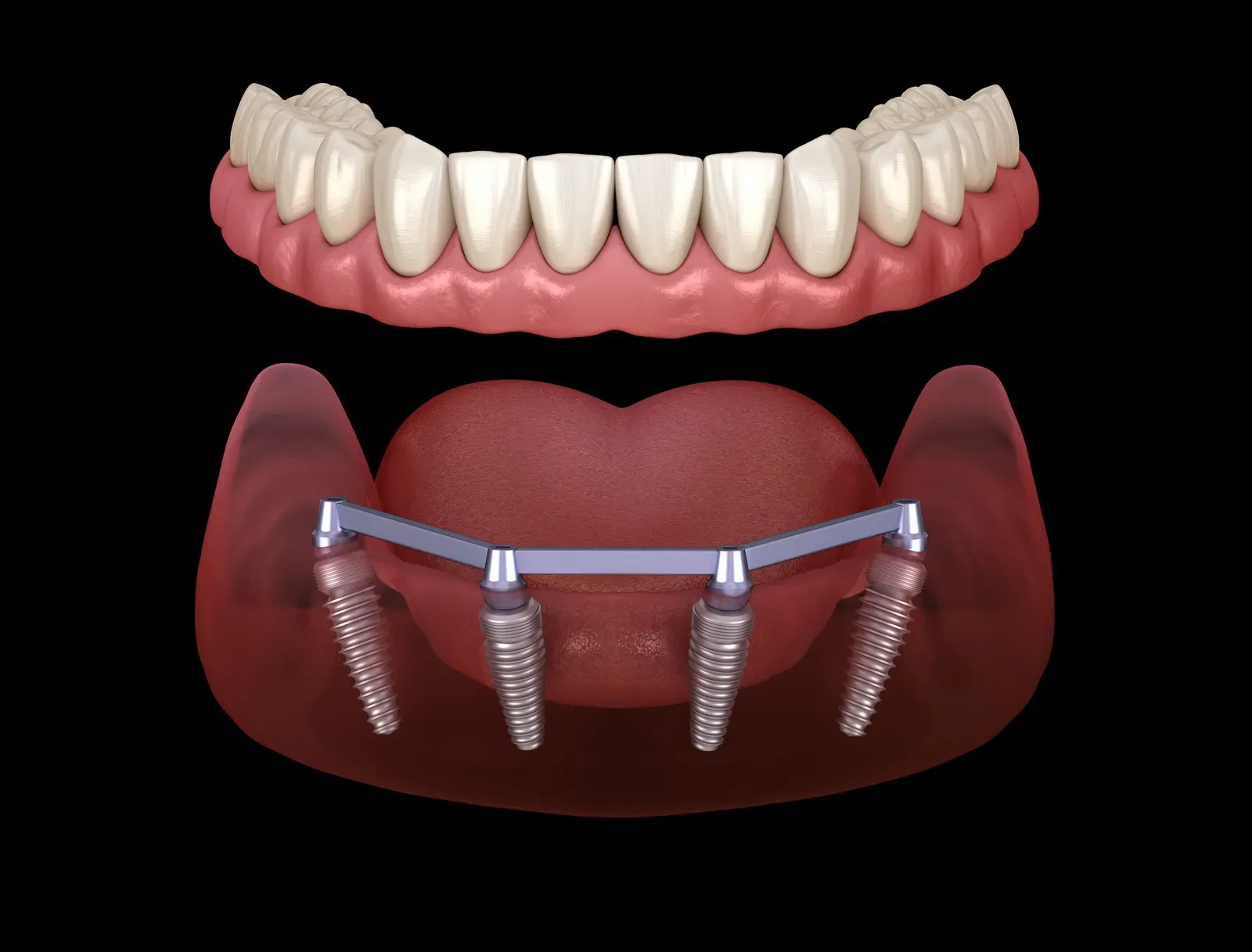
Losing a tooth changes more than your smile. It can shift the way you chew, alter your speech, and gradually affect the bone that once supported the root. At Hidden Ravines Dental, we place dental implants to give Powell families a tooth replacement option that behaves like a natural tooth from the root up, not just at the surface. A titanium implant post is anchored directly into the jawbone, where it fuses with living bone over several months to create a stable foundation strong enough for everyday biting and chewing.
We understand that missing teeth affect confidence just as much as function. Many patients come to us after years of hiding a gap in their smile, struggling with a loose partial denture, or avoiding certain foods altogether. Our approach starts with a thorough conversation about your goals, followed by detailed imaging and a bite evaluation so we understand exactly how your jaw, gums, and remaining teeth work together before any treatment begins.
Every implant case is planned individually. Bone density, gum health, the number of teeth being replaced, and your long-term oral health goals all shape the treatment plan we recommend. Our team walks you through each phase clearly, so you always know what to expect and why each step matters for a result that lasts for decades rather than years.
Tooth loss affects everyone differently, and the symptoms that signal it is time for a permanent solution can be subtle at first. If any of the following sound familiar, an implant consultation is worth scheduling.
Not every situation calls for the same approach, and factors like bone density or gum disease can change your timeline. A clinical evaluation lets us confirm candidacy and address any underlying issues before moving forward, so the final result is built on a healthy, stable foundation.
Tooth loss rarely happens for just one reason. Understanding what caused it helps us plan a treatment that addresses the underlying issue, not just the missing tooth itself.
When decay reaches deep into a tooth's structure, a filling or crown may no longer be enough to save it, leaving extraction and replacement the healthier long-term path.
Gum disease is a leading cause of adult tooth loss because it breaks down the bone and tissue that hold teeth in place, often without early warning symptoms.
A sports injury, fall, or accident can fracture or knock out a tooth instantly, and an implant restores both the function and appearance of the lost tooth.
Occasionally a previously treated tooth develops a new infection or fracture that cannot be resolved with retreatment, making extraction and implant placement the more predictable option.
Years of wearing a missing tooth gap untreated cause the jawbone in that area to shrink, which is why we often recommend replacement sooner rather than later.
Some patients are simply more prone to weaker enamel, thinner bone, or gum recession as they age, increasing the likelihood of needing a durable replacement at some point.
Implant treatment happens in careful, deliberate stages. We move at a pace that respects your healing timeline while keeping you informed at every point along the way.
We start by listening to your concerns, reviewing your dental history, and discussing what a restored smile means to you so the plan reflects your personal goals.
Digital imaging and a detailed exam measure your bone density, gum condition, and bite alignment so we can confirm implant placement sites with precision.
We map out the number of implants needed, whether any bone grafting is required, and a realistic timeline from placement through final restoration.
The implant post is placed under local anesthesia with careful attention to comfort, then given several months to fuse securely with the surrounding bone.
Once healing is complete, we attach a custom-shaded crown matched to your natural teeth, then schedule follow-up visits to confirm the implant is functioning comfortably.
Dental implants are built to solve more than the cosmetic gap in your smile. They address the function, comfort, and long-term oral health that a missing tooth puts at risk.
An implant restores close to your natural bite force, so foods you may have avoided for years are back on the menu without hesitation.
Because the implant integrates with bone like a natural root, it helps slow the bone loss that typically follows tooth extraction.
Unlike a traditional bridge, an implant does not require grinding down healthy adjacent teeth, keeping more of your natural structure intact.
The custom crown is shade-matched to your smile, so the finished result blends in rather than standing out.
Filling a gap stabilizes airflow and tongue placement, which often improves speech that had been affected by a missing tooth.
With proper care, implants are designed to last decades, making them a durable alternative to restorations that require periodic replacement.
The long-term stability of a dental implant depends almost entirely on the quality and volume of bone surrounding it. When a tooth is lost, the jawbone that once supported its root no longer receives the stimulation it needs, and it begins to gradually resorb. The longer a gap goes untreated, the more bone volume is typically lost, which is one of the biggest reasons we encourage patients not to delay treatment.
During your evaluation, we use detailed imaging to measure bone height and width at the planned implant site. In cases where bone volume has diminished, a bone graft can rebuild the foundation needed to support a stable, long-lasting implant. This extra step adds time to the overall process but significantly improves the odds of a result that holds up for years without complication.
Patients who act sooner after losing a tooth often require less preparatory work and enjoy a more straightforward path to their final restoration. That is why we recommend scheduling a consultation as soon as possible after tooth loss, even if you are still deciding on the right replacement option for you.
An implant does not decay like a natural tooth, but the gum tissue and bone around it still need daily attention to stay healthy for the long haul.
Clean around the implant crown just as you would a natural tooth, using a soft-bristle brush to protect the surrounding gum tissue.
Removing plaque from beneath the gumline near the implant base helps prevent peri-implant inflammation over time.
Ice, hard candy, and similar items can stress the crown or abutment, so moderation protects your investment.
Routine professional cleanings let us monitor the implant site and catch any early signs of gum irritation.
If you clench or grind your teeth at night, a protective night guard can help shield your implant from excess pressure.
Smoking slows healing and is linked to higher implant failure rates, so quitting supports both your implant and overall oral health.
These habits go a long way toward protecting your implant, but they work best alongside regular professional checkups, not in place of them.
"Our patients come to us hoping to feel like themselves again. Watching someone bite into an apple or laugh freely for the first time in years, without thinking twice, is exactly why we do this work."
Straightforward answers to the questions we hear most often from patients considering dental implants in Powell, Ohio.
BOOK YOUR VISIT
Join the OH 43065 families who trust Hidden Ravines Dental. New patients and emergencies are always welcome.

 740-369-1953